A Note Before We Begin
Among the seekers I have read for over the years, the natives of Uttara Bhādrapadā arrive at the consultation in a manner that contrasts strikingly with the natives of the asterism that immediately precedes it. Where Pūrva Bhādrapadā natives carry an active fire that the surrounding cultural mainstream has not always known what to do with, Uttara Bhādrapadā natives carry a stillness — a deep, watered, almost oceanic quality of presence that the surrounding people often experience as calming without quite being able to articulate why. They are not, in the usual sense, the most active people in any room they enter; they are the still ones, the witnesses, the natives whose contemplative depth is recognisable in the way they listen and in the way they hold the conversation's silences. Reading their charts, I find Uttara Bhādrapadā recurring with a frequency that confirms what the older astrological tradition has long said about this asterism: this is the lunar mansion of the contemplative depth, of the native whose work in this incarnation involves the patient holding of the quiet wisdom that comes from the long stillness, and the asterism's signature is, accordingly, one of the most restful in the entire wheel for natives willing to do the slow work the asterism asks for.
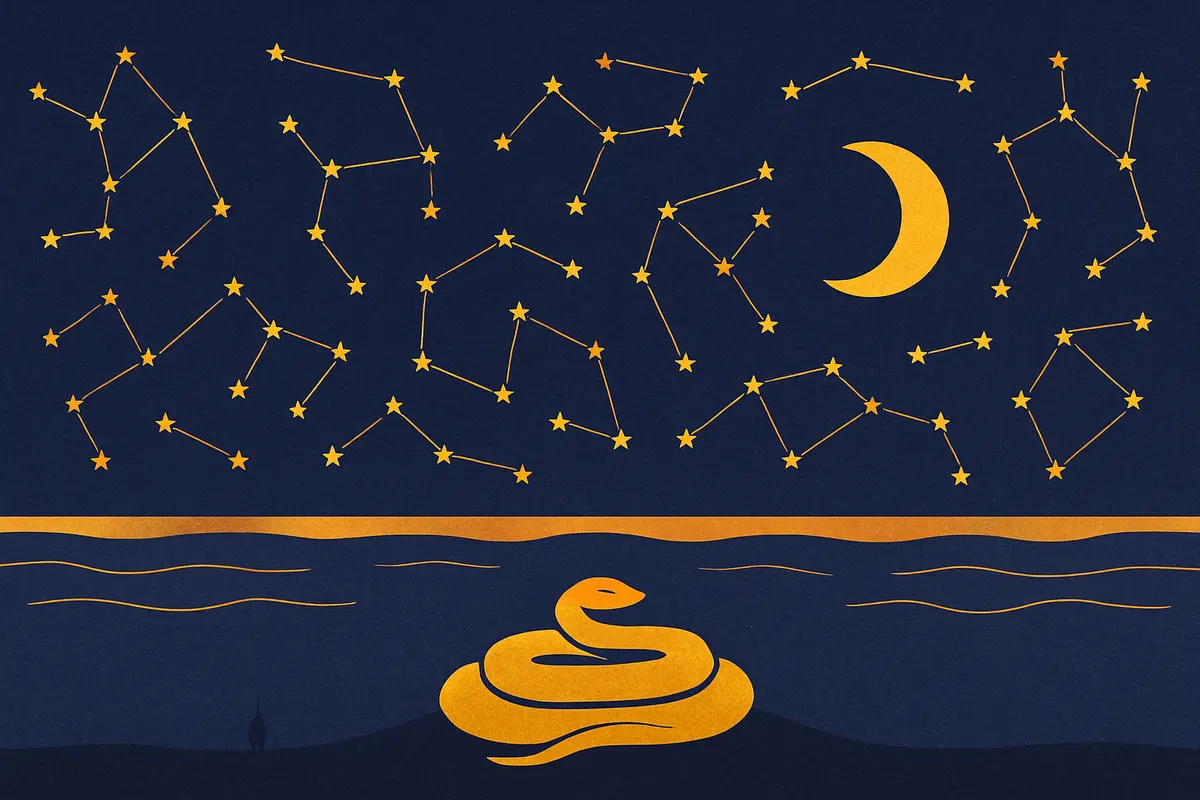
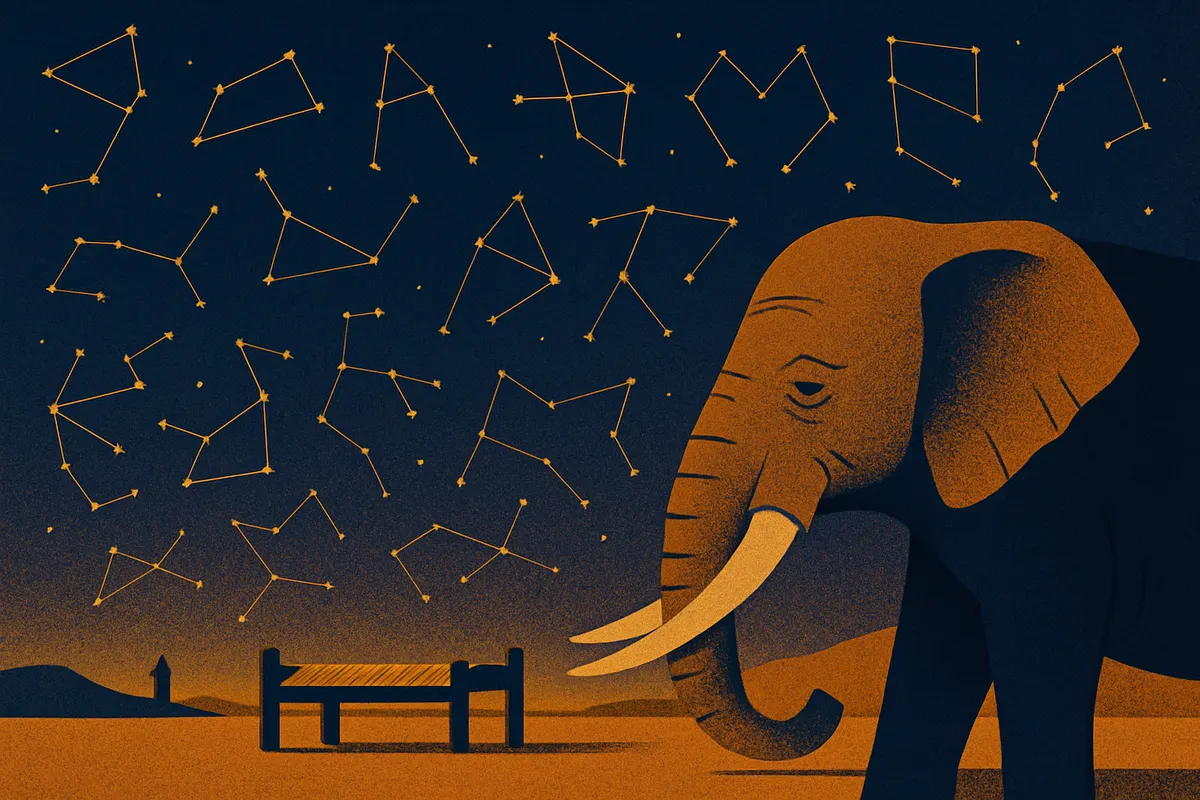
The classical sources describe Uttara Bhādrapadā through several images, each opening a different window onto the same signature. The most ancient is the back legs of the funeral cot — the manca image that the asterism shares with its predecessor Pūrva Bhādrapadā, but read here as the part of the bier that supports the body during the long final journey, the cot's stable foundation as the cremation procession moves slowly toward its destination. The second image is the twin-headed serpent — the cosmic snake whose two heads gaze in opposite directions while its long body coils through the depths. The third image, drawn from the presiding deity Ahir Budhnya, is the kuṇḍalinī itself: the serpent of the deep, coiled at the base of the cosmic axis, holding in her stillness the latent wisdom that the long contemplation gradually awakens. Each of these images returns us to the same theme: a quality of contemplative stillness that the asterism asks its natives to recognise and to inhabit rather than to suppress under cultural pressure to be more visibly active.
This article is for the seeker who has just learned that their Moon, their Lagna, or another sensitive point in their chart sits in Uttara Bhādrapadā. We will move slowly, beginning with what the classical texts actually say, then turning to Ahir Budhnya and the older Vedic theology of the serpent of the deep, the four pādas across the body of Pisces, the long Saturn Mahādaśā for these natives, and finally to the practical questions of body, livelihood, and the relationships in which Uttara Bhādrapadā natives most fully come into their own. Read this with your chart open if you have it. Underline what feels true.
Where Uttara Bhādrapadā Sits in the Wheel
Uttara Bhādrapadā is the twenty-sixth of the twenty-seven nakshatras. It occupies the zodiacal range from three degrees twenty minutes to sixteen degrees forty minutes of Mīna (Pisces), which means that all four pādas of this nakshatra lie squarely within Jupiter's mutable water sign of devotional dissolution. Unlike Pūrva Bhādrapadā before it, which straddles the Aquarius-Pisces boundary, Uttara Bhādrapadā is wholly contained within Pisces, and the native born under this asterism is therefore stationed in the central body of the contemplative water sign — the chamber where the dissolving devotional energy of Mīna is at its richest.
The lord of Uttara Bhādrapadā is Śani — Saturn — whose nature in the classical reading is the planet of patience, of long discipline, of the slow work that produces durable results across decades. The pairing of Saturn's rulership with Pisces's contemplative water gives Uttara Bhādrapadā natives a temperament that the older texts read as the disciplined contemplative's signature: outwardly quiet and Saturn-shaped in their patience, inwardly carrying the deep oceanic receptivity of Pisces. The classical reconciliation is that Saturn's discipline gives Pisces's dissolving water its container — without Saturn, Pisces's softness would dissipate; with Saturn, the softness becomes the sustained contemplative stillness that the asterism is constituted around.
The presiding deity, Ahir Budhnya — ahi-budhnya, literally the serpent of the depth — is one of the more distinctive divinities in the older Vedic pantheon. He is invoked in the Vedic hymns as a serpent dwelling in the cosmic depths, sometimes identified with the kuṇḍalinī of the later Tantric tradition, sometimes with the great serpent Ananta-Śeṣa upon which Vishnu rests in the cosmic ocean. The classical reading is that Uttara Bhādrapadā natives carry, by the asterism's signature, a particular oceanic-depth orientation: their wisdom is not the visible argumentative wisdom of the Mercurial mind but the slower, deeper, cumulative wisdom that comes from the long contemplative stillness in which the depths are allowed to speak.
Notice already what the data is telling us. A nakshatra named for the later blessed feet, ruled by Saturn (the disciplinarian), presided over by the serpent of the deep (the keeper of latent wisdom), located in the central body of Pisces (the sign of devotional dissolution). It is, in plain terms, the constellation of the disciplined contemplative whose long stillness becomes, over the decades of the adult life, the source of the deep wisdom the surrounding community comes to draw upon. The four pādas of the asterism are all in Pisces, which is why the asterism's signature has the particular quality of being centrally placed within its sign rather than navigating an energy-shift across a sign boundary.
What the Classics Actually Say
Brihat Parashara Hora Shastra, in its enumeration of the lunar mansions (BPHS, Nakṣatra Adhikāra), names Śani as the lord of Uttara Bhādrapadā and Ahir Budhnya as the presiding deity, and assigns to the asterism the qualities of dhruva — fixed, permanent — and sthira — steady, established. The pairing of these two qualities is significant. Dhruva points to the unwavering quality of the deep meditation that the asterism asks for; sthira points to the stability that develops when the long contemplative practice has been sustained over years. Parāśara is signalling that this nakshatra is, of all the lunar mansions, the one most likely to produce natives whose presence in the surrounding community functions as a fixed point of contemplative steadiness, and whose work tends toward what is built to last rather than what is improvised in the moment.
Phaladeepika by Mantreśvara, in his treatment of nakshatra qualities (Phaladeepika, Chapter 2), elaborates that natives born when the Moon is in Uttara Bhādrapadā tend toward a temperament that is contemplative, kind, gifted with a deep intuitive intelligence, and inclined toward callings that involve the patient cultivation of inner work over many years. Mantreśvara is explicit that these natives often distinguish themselves in disciplines that require the willingness to sit with what cannot be quickly resolved — the long contemplative practice, the patient counselling work that depends on the holding of difficult material across many sessions, the deep scholarship that takes decades to produce its mature form. The classical phrase is gambhīra — deep — and it captures the temperament well.
Saravali by Kalyāṇa Varma, in its chapter on lunar mansions (Saravali, Chapter 11), gives Uttara Bhādrapadā the further association with the patience of the great cosmic serpent. The image he draws is of the native whose contribution to the surrounding world is not the brilliant insight of a single year but the slow accumulating wisdom of decades of patient stillness. Kalyāṇa Varma also notes the Uttara Bhādrapadā native's tendency toward a certain reluctance to compete in the surrounding cultural arenas — the temperament does not push itself forward, preferring to let recognition arrive when it arrives rather than to seek it.
The Jaimini Sūtras give us, again, the Chara Kāraka tool. When a planet positioned in Uttara Bhādrapadā rises to the rank of Atma Kāraka in a chart, the soul-task of the lifetime carries the contemplative-depth signature, and the native is asked to do their integration work in the form of the long sustained stillness that Ahir Budhnya's coiled posture represents.
Ahir Budhnya and the Older Vedic Theology of the Serpent of the Deep
To understand more fully what Ahir Budhnya is asking of an Uttara Bhādrapadā native, we have to step further into the older Vedic theology of the serpent of the deep. Ahir Budhnya — ahi-budhnya, the serpent dwelling at the bottom — is a relatively rare invocation in the Vedic literature, but the few hymns that name him do so with particular care. He is described as the great serpent who dwells in the cosmic ocean, who holds within his coiled stillness the latent generative power from which the manifest world periodically emerges, and to whom the seeker of the deep wisdom must, in some interior way, descend.
The classical Tantric and Yogic literature, building on the older Vedic foundation, identifies Ahir Budhnya with the kuṇḍalinī — the serpent power coiled at the base of the suṣumnā axis, three-and-a-half coils deep, holding in her stillness the latent spiritual energy that the long contemplative discipline gradually awakens. The image is consistent across the classical sources: the deity of this asterism is the still serpent of the depths, whose wisdom is not displayed but held, and whose function is to make available to the patient practitioner the deep latent energies that more agitated temperaments cannot reach.
For the Uttara Bhādrapadā native, this Ahir Budhnya theology is the deeper structural teaching of the asterism. The native is, by the asterism's signature, the human deputy of the still serpent. The contemplative depth the native carries is not, in the integrated reading, a personal eccentricity to be apologised for in the more energetic surrounding culture; it is the asterism's enactment of the cosmic function the deity represents. The seeker who has been called to inhabit the long stillness — the patient meditation, the deep scholarship that requires decades, the contemplative practice that the surrounding world does not always understand — is doing, at the human scale, what Ahir Budhnya is doing at the cosmic.
There is a further nuance the older sources draw out. The serpent of the deep is the same cosmic figure who, in the Purāṇic literature, is identified with Ananta — the infinite — upon whose body Vishnu rests in the cosmic ocean during the periods between cycles of manifestation. The integration of this teaching for the Uttara Bhādrapadā native is the discovery that the stillness the asterism asks for is not absence of activity but the deep ground from which activity itself periodically emerges. The contemplative is not, in this reading, opposed to the active life; the contemplative is its source.
The Four Pādas in the Body of Pisces
Uttara Bhādrapadā's four pādas all lie in Pisces, and each pāda is sub-ruled by a different Vimshottari lord that gives the pāda its particular flavour. Because the entire nakshatra sits in Jupiter's mutable water sign, every pāda carries the contemplative-depth base layer; what changes is the navāṃśa quality the contemplation picks up.
The first pāda — three degrees twenty minutes to six degrees forty minutes of Mīna — falls in the Leo navāṃśa and is sub-ruled by the Sun. This is the visible-contemplative pāda, where the asterism's depth meets a solar dignity that gives the native a certain quiet visible presence. Natives born here are often the contemplatives whose stillness the surrounding community comes to recognise — the senior teacher whose presence in a room shifts the conversation, the long-tenured pastoral figure whose standing comes from accumulated quiet rather than from declarative speech. The Leo navāṃśa softens the more retiring tendency of the asterism's base layer and lets the native hold a public-facing role without compromising the contemplative depth.
The second pāda — six degrees forty minutes to ten degrees of Mīna — falls in the Virgo navāṃśa and is sub-ruled by Mercury. This is the analytic-contemplative pāda, where the asterism's depth is paired with a Mercurial care for precise distinctions. Natives born here often work in callings that combine contemplative practice with disciplined intellectual work — the long-form scholar of contemplative texts, the careful editor of devotional literature, the teacher whose approach combines deep contemplative practice with rigorous analytic attention. The Virgo-Mercury sub-rulership intensifies the asterism's gambhīra signature in its most intellectually precise form.
The third pāda — ten degrees to thirteen degrees twenty minutes of Mīna — falls in the Libra navāṃśa and is sub-ruled by Venus. This is the relational-contemplative pāda, where the asterism's depth is paired with Venus's relational sense. Natives born here often work in callings that combine contemplative practice with relational repair — the long-tenured therapist whose approach is contemplative-relational, the senior counsellor whose work combines deep stillness with the artful holding of the relational field. The Venus sub-rulership softens the Saturn-Pisces gravity and produces the most relationally accessible of the four pāda signatures.
The fourth pāda — thirteen degrees twenty minutes to sixteen degrees forty minutes of Mīna — falls in the Scorpio navāṃśa and is sub-ruled by Mars. This is the deep-water pāda, where the asterism's contemplative depth meets the Scorpio-Mars intensity in the most concentrated form. Natives born here often work with material that other natives prefer to leave alone — the contemplative practitioner working with grief and dying, the long-tenured therapist of trauma, the depth-psychologist whose practice involves the patient holding of what surrounding culture has been unwilling to face. The integration involves the channelling of the Scorpio-Mars heat through the Pisces-Saturn stillness, so that the intensity serves the contemplative work rather than burning it out.
The Saturn Mahādaśā for the Uttara Bhādrapadā Native
Because Śani is the lord of this nakshatra, the Saturn Mahādaśā in an Uttara Bhādrapadā native's life carries a particular density of meaning. The nineteen-year period of Saturn — the longest of the Vimśottarī periods after Venus — when it falls upon a person whose Janma Nakshatra is Uttara Bhādrapadā, tends to operate as the chapter in which the asterism's contemplative-depth signature is most fully ripened and integrated. The Vimshottari rule is the same one we have cited elsewhere: BPHS gives, in its Vimshottari Adhikāra, the principle that the Mahādaśā of the nakshatra-lord acts most powerfully on the matters that the nakshatra itself signifies, and Uttara Bhādrapadā signifies the long stillness and the deep wisdom that develops within it.
For natives whose Saturn Mahādaśā has not yet arrived, the years preceding it are usually spent in the patient accumulation of contemplative material — the practice deepening, the scholarship slowly maturing, the relational and counselling work gathering its weight — that the daśā will later integrate into more visible form. When the Śani daśā opens, the nineteen years tend to bring the asterism's signature into a phase in which the long discipline begins to produce visible adult fruit. Uttara Bhādrapadā natives often describe the Saturn Mahādaśā as the chapter in which their contemplative orientation, previously held within their interior life, became the visible centre of their adult work — the senior teaching role consolidated, the long scholarly project completed, the contemplative practice formalised into public form.
There is a classical caveat. When the natal Saturn is afflicted in an Uttara Bhādrapadā chart — combust by close conjunction with the Sun, debilitated in Aries, or placed in a difficult house — the Śani Mahādaśā may bring the contemplative depth together with periods of melancholy or with intensifications of the asterism's natural retiring tendency that drift toward isolation. The classical remedy is sustained Saturn-related observance, particularly the recitation of the Hanumān Cālīsā on Saturdays (Hanumān is classically given as the antidote to Saturn's harsher transits), the offering of black sesame and oil at the household altar, and the cultivation of disciplined social engagement that prevents the asterism's interior pull from becoming complete withdrawal.
The antardaśās within the Saturn Mahādaśā that most consistently bring forward the Uttara Bhādrapadā signature are the Saturn-Jupiter sub-period (the contemplative depth meeting the dharmic teacher in the most generous combination) and the Saturn-Mercury sub-period (the deep stillness articulating itself through careful precise speech). Many Uttara Bhādrapadā natives describe these antardaśās as the chapters in which their adult contribution found its most durable form.
The Body and Constitution
The classical texts assign Uttara Bhādrapadā to a particular set of bodily significations. Saravali, in its enumeration of the body parts governed by each nakshatra, places the shins and the soles of the feet under Uttara Bhādrapadā's care, with extended significations covering the lower-leg circulation and the lymphatic system whose patient continuous flow corresponds, in the somatic-symbolic reading, to the cosmic ocean of the asterism's iconography. The placement is consistent with the asterism's signature: the soles of the feet are the body's contact with the ground, and the patient flow of the lower-body circulation is the bodily analogue of the deep cosmic waters that Ahir Budhnya inhabits.
In the doṣa typology, Uttara Bhādrapadā is read as predominantly Kapha with a notable Vāta secondary. The Kapha dimension corresponds to Pisces's water-element and to the deep oceanic quality of the asterism; the Vāta corresponds to Saturn's air-quality (Saturn shares with Mercury the air-element classification in some readings) and to the cara-like mobility of the deep currents. The Pitta dimension is the least pronounced of the three. This Kapha-Vāta combination produces a constitution built for sustained contemplative effort but prone to the lethargy and circulation-stagnation that excessive sedentariness can produce.
The classical health cautions for Uttara Bhādrapadā natives concentrate around vitality concerns of the lower-body circulation, the patterns associated with prolonged sedentariness in contemplative practice, and the chronic-Kapha accumulation that the stillness-prone temperament can produce. The classical recommendation is the deliberate cultivation of regular movement — walking practice, gentle yoga that maintains lower-body circulation — alongside the contemplative discipline that the asterism is constituted around. These are framed as preventive considerations, not diagnoses. For any specific health concern, please consult a qualified medical professional.
Career: The Calling That Rewards the Long Stillness
Uttara Bhādrapadā's career signature, in classical reading, is the calling that rewards the long stillness. Across the consultations I have conducted, Uttara Bhādrapadā natives are over-represented in callings where the work involves the patient holding of contemplative material across decades — the long-tenured spiritual teacher, the senior contemplative practitioner, the scholar of devotional or contemplative texts whose contribution accumulates slowly across many books, the depth-psychologist whose practice requires the willingness to sit with difficult material across many years, the counsellor of grief and dying whose work depends on the contemplative steadiness the asterism gives.
What modern occupational psychology adds to the older astrological tradition is the observation that Uttara Bhādrapadā natives are at particular risk for the cultural pressure to be more visibly productive than the asterism's signature naturally is. The classical sources hint at this in Kalyāṇa Varma's note about the temperament's reluctance to compete; modern observation gives the more specific point that Uttara Bhādrapadā natives often spend their twenties and early thirties in roles that do not fully fit, before discovering — usually in the late thirties or forties — the calling whose long-arc patience finally aligns with the asterism's natural pace.
The integration the classical sources counsel is twofold. First, the Uttara Bhādrapadā native should seek callings whose contemplative pace is genuinely valued by the institution they work within rather than treated as insufficient productivity. The fit between the native's contemplative temperament and the institutional environment determines, more than almost any other factor, whether the long career can be sustained without periodic forced acceleration that exhausts the native. Second, the native should consciously develop a relationship to identity that does not depend on external visibility; the contemplative gift is real even when the surrounding institutions do not recognise it, and the native who has internalised this is more durable across the long career.
The Jaimini Chara Kāraka system gives us the further reading. When the Atma Kāraka falls in Uttara Bhādrapadā, the soul-task carries the contemplative-depth signature. When the Amatya Kāraka falls in Uttara Bhādrapadā, the livelihood itself takes on the long-stillness pattern, and the native should expect their professional life to organise around the patient holding of what cannot be quickly produced.
Relationships: The Partner Who Can Hold the Quiet
Uttara Bhādrapadā's relationship signature is, in classical reading, perhaps the most distinctive of any of the asterisms whose lord is Saturn. The native who carries the asterism's deep contemplative stillness often arrives in adult relational life looking, by their own constitutional pace, slower than the cultural average partner. They are not, in the usual sense, the most demonstratively expressive partners; they are the still ones, the partners whose presence is felt rather than performed, whose love is shown through the quiet steadiness of their being-there rather than through the more visible affirmations the cultural mainstream tends to expect.
What the classical sources suggest, and what relational observation corroborates, is that Uttara Bhādrapadā natives flourish in partnerships where their contemplative stillness is consciously valued by the other partner rather than experienced as withdrawal or as emotional unavailability. Saravali notes, in its discussion of marital indications for Uttara Bhādrapadā-Moon natives, that these natives often do best with partners who have their own contemplative or quietly-grounded temperament, whose presence in the partnership creates a shared field of stillness that the more agitated partnerships cannot generate.
The integration work for Uttara Bhādrapadā natives in the relational domain often involves the conscious learning of the relational practices that the asterism's contemplative signature does not naturally produce — the demonstrative affirmation, the explicit verbal expression of love, the visible making of relational time when the natural temperament might prefer to rest in shared silence. The integration is not the abandonment of the contemplative depth; it is the building of the bridge by which the contemplative depth is communicated to the partner who needs more visible signs that the love is real.
For the Manglik question, Uttara Bhādrapadā natives whose Mars falls in their first, fourth, seventh, eighth, or twelfth house carry the standard Manglik signature. The fourth pāda, with its Scorpio navāṃśa Mars sub-rulership, deserves particular attention; for natives in this pāda, the Manglik considerations operate with a slightly intensified weight, and chart-matching during marriage discussions remains advisable.
The relational integration work for Uttara Bhādrapadā natives often unfolds across the third and fourth decades of life, when the early contemplative tendency has had time to consolidate and the partnerships of adulthood have provided enough material for the configuration to become visible.
The Sade Sati Question
Uttara Bhādrapadā-Moon natives have their natal Moon in Pisces, and Saturn's transit through Aquarius, Pisces, and Aries constitutes their Sade Sati. Because Uttara Bhādrapadā lies in the central body of Pisces, the second phase — Saturn directly transiting Pisces and crossing the natal Moon — falls squarely on the asterism's home ground, which gives the central phase a particular quality of conscious examination of the contemplative orientation the native has been holding.
The integration work during Sade Sati for Uttara Bhādrapadā natives is, in classical reading, perhaps the most generative of any nakshatra in the wheel for natives willing to do the work. The seven and a half years tend to bring the contemplative depth into sharp examination, asking the native to consciously distinguish the practices that genuinely serve the deeper seeking from those that have been continued by inertia. Saturn's slow patient pressure, applied to the asterism's natural stillness, is not, for these natives, the alien testing it can feel like for more active asterisms; it is, more often, the conscious deepening of work the native was already doing.
The natives who do the work that Sade Sati asks for typically emerge from the seven and a half years with their contemplative practice better calibrated and their relational and vocational arrangements more aligned with the asterism's genuine signature.
Integration Practices and Traditional Remedies
The integration work for Uttara Bhādrapadā natives, drawn from the classical remedy literature, concentrates on three areas. The first is Saturn-related observance — the conscious holding of the Saturnine discipline within which the asterism's contemplative depth is best held. The classical practices include the recitation of the Hanumān Cālīsā on Saturdays (Hanumān is classically the deity of refuge during Saturn's harder transits), the chanting of Saturn's bīja mantra (oṃ prāṃ prīṃ prauṃ saḥ śanaiścarāya namaḥ) during difficult Saturn transits, and the offering of black sesame, oil, and dark cloth at the household altar.
The second is Vishnu-related observance — the honouring of the cosmic ocean and the great serpent upon which Vishnu rests. The classical practices here include the recitation of the Viṣṇu Sahasranāma on Wednesdays or Saturdays, the offering of tulasi at the household altar, and the disciplined keeping of the contemplative practice that the Vaiṣṇava tradition has refined across centuries. The integration of Saturn's discipline with Vishnu's preservative depth is the structural work the asterism is constituted around.
The third is the cultivation of the embodied counterweight to the asterism's contemplative pull. The native should consciously develop the daily movement practices — walking, gentle yoga, the embodied disciplines that maintain the lower-body circulation the asterism's somatic signature concerns — alongside the contemplative practice. The deep stillness the asterism rewards is best held in a body that has not been allowed to seize up around it.
Closing
The teaching of Uttara Bhādrapadā, in classical reading, is the teaching of the deep stillness consciously inhabited rather than culturally apologised for. The back legs of the funeral cot are the symbol of the stable foundation that bears the body's final journey to its destination. The twin-headed serpent is the symbol of the cosmic snake whose depths the seeker is asked to descend into. Ahir Budhnya is the patron of the latent wisdom that the long contemplative stillness gradually awakens. Saturn's rulership is the gift of the disciplined patience by which the stillness becomes durable across the decades. The four pādas in the central body of Pisces each give their own flavour to the work, but the underlying signature is the same: this is the asterism of the deep contemplative whose long stillness becomes, over the arc of the adult life, the source of the wisdom the surrounding community gradually comes to draw upon. May the seeker reading this find the practice that genuinely deepens the stillness, may the contemplative pace be valued by those who walk beside the native, and may the serpent of the deep awaken in her own time the wisdom that has been waiting.
Related cornerstones
If this reading was useful, the following cornerstones address related dimensions of the same broader tradition:
- Purva Bhadrapada Nakshatra: Aja Ekapāda's One-Footed Pillar and the Fire That Refines
- Uttara Ashadha Nakshatra: The Later Invincible and the Classical Reading of the Universal Dharma
- Uttara Phalguni Nakshatra: Aryaman's Contract and the Patron of Lineage
- Anuradha Nakshatra: Mitra's Friendship and the Devotional Heart